
Radiographic Testing
Radiographic Testing uses X-rays or Gamma rays to inspect the internal structure of materials.
Understand Radiographic Testing
Principle of Radiographic Testing:
The part is placed between the radiation source and a piece of film. The part will stop some of the radiation. Thicker and denser area will stop more of the radiation. The film darkness (density) will vary with the amount of radiation reaching the film through the test object. These differences in “absorption” can be recorded on film, or electronically.
The energy of the radiation affects its penetrating power. Higher energy radiation can penetrate thicker and denser materials. The radiation energy and/or exposure time must be controlled to properly image the region of interest.
Radiation Sources:
Two of the most commonly used sources of radiation in industrial radiography are x-ray generators and gamma ray sources. Industrial radiography is often subdivided into “X-ray Radiography” or “Gamma Radiography”, depending on the source of radiation used.
Gamma Radiography:
Gamma rays are similar to X- Rays except that they have much shorter wavelength and differ in their origin. Gamma rays are emitted from the nucleus itself during the process of radioactivity. Gamma rays are produced by a radioisotope. A radioisotope has unstable nuclei that do not have enough binding energy to hold the nucleus together. The spontaneous breakdown of an atomic nucleus resulting in the release of energy and matter is known as radioactive decay.
Most of the radioactive material used in industrial radiography is artificially produced. This is done by subjecting stable material to a source of neutrons in a special nuclear reactor. This process is called activation.
Two most commonly used gamma ray sources in industrial radiography are iridium 192 and cobalt 60.
COBALT - 60 RADIOGRAPHY
Cobalt-60 is a preferred source for the radiography of steel thickness of about 70mm to 180mm. We have world’s latest and sophisticated gamma ray projectors and proud to say that we are the only private agency in India having a maximum number of 70mm to 180mm Cobalt -60 (COCAM-120, Sentry 110/330, Spec 300, Vox-100) exposure devices.
X-Ray RADIOGRAPHY
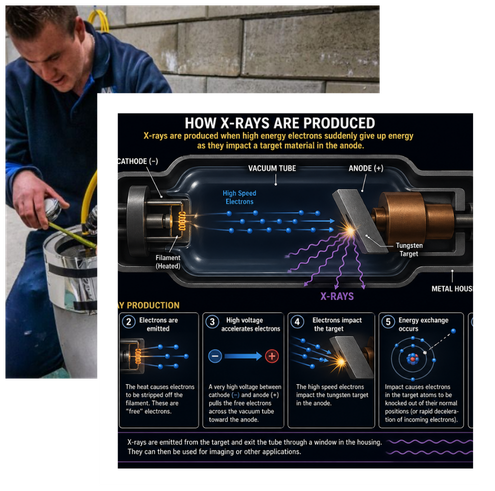
X – Rays are produced whenever high energy electrons suddenly give up energy. This can be done either by accelerating electrons to a high speed and then stopping them suddenly, or by these high speed electrons striking others and knocking them out of their normal positions. When these dislodged electrons fall back into place they give off X-Rays. X-rays are produced by establishing a very high voltage between two electrodes, called the anode and cathode.
To prevent arcing, the anode and cathode are located inside a vacuum tube, which is protected by a metal housing. The cathode contains a small filament much the same as in a light bulb. Current is passed through the filament which heats it. The heat causes electrons to be stripped off. The high voltage causes these “free” electrons to be pulled toward a target material (usually made of tungsten) located in the anode. The electrons impact against the target. This impact causes an energy exchange which causes x-rays to be created.
Linear Accelerator Radiography
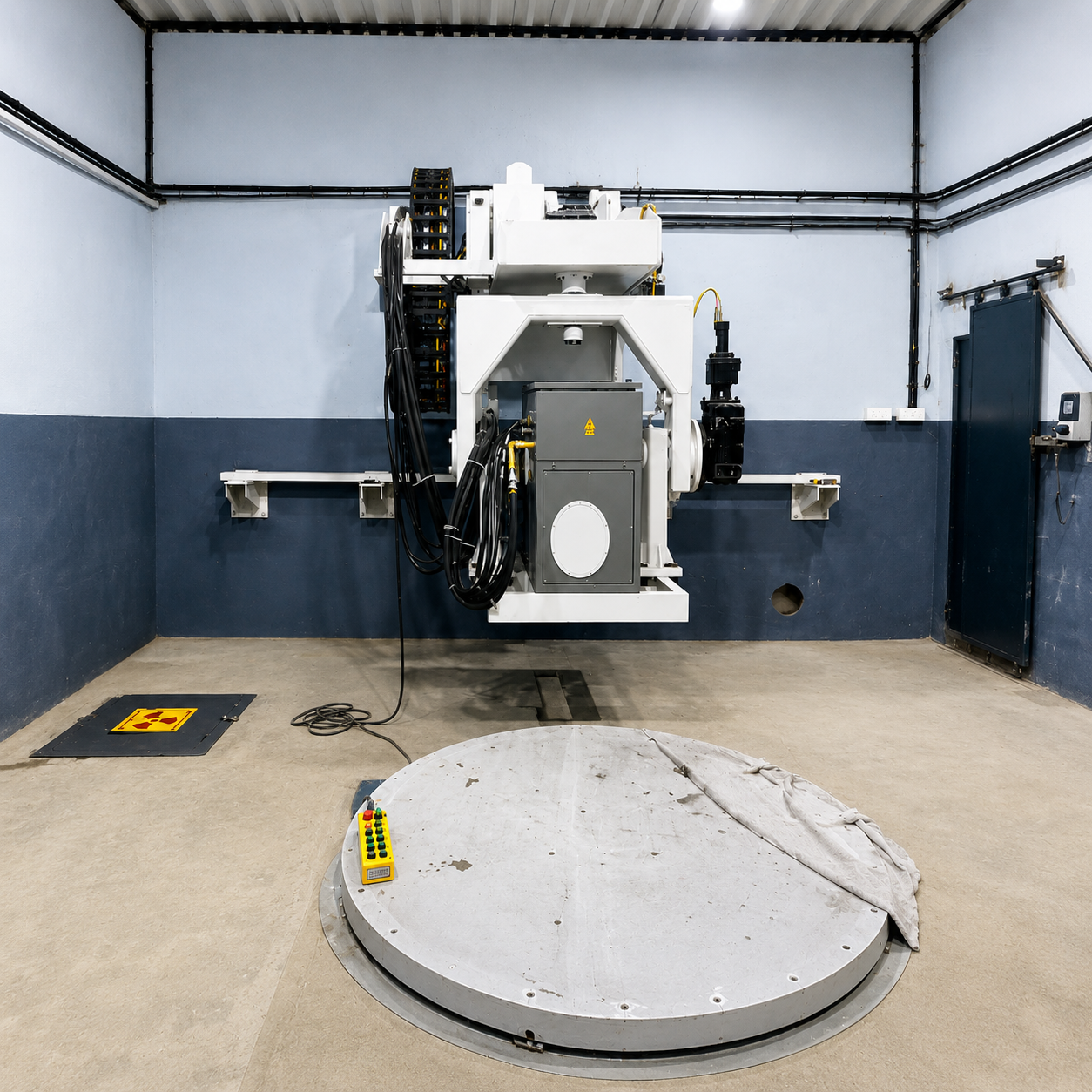
Whether you’re inspecting critical welds, pressure vessels, pipeline components, or heavy castings, our upgraded system delivers faster, deeper, and clearer results.
Our facility is equipped with:
9 MeV Linatron – High-energy X-Rays 9 MeV LINAC (Dual Energy) deep penetration radiography, ideal for thick and dense materials and detect internal flaws or defects without damaging the object being inspected. The linac can switch between two electron beam energies (e.g., 6 MeV and 9 MeV).
Modern Radiography Enclosure – A state-of-the-art enclosure (a shielded space to contain ionizing radiation during industrial radiography) designed as per the guidelines of competent authority RASD AERB to use 9MeV linear accelerator.
20-Ton Overhead Crane – A double girder EOT (Electric Overhead Traveling) crane for higher lifting capacities and spans. Ensures safe and efficient handling of heavy components.
20-Ton Precision Turntable – Advanced turntable for positioning jobs a specialized platform that rotates component 360-degree for thorough inspection from all angles.
Advanced Manipulator System – Manipulator holding an industrial Linear Accelerator machine designed to precisely position and maneuver the linear accelerator (LINAC). It enables a wide range of movements, including translation.
Advanced Transfer Trolley – Material handling vehicles that move loads without the need for rails. It is typically battery-powered. For movement of hesavy components from outside to inside the radiography Enclosure.
Serving Industries Like:
These capabilities position us to serve industries such as Defence, Valve Manufacturers, Energsy Oil & Gas, Power Generation, Shipbuilding, Aerospace, Heavy Manufacturing.
Linac Radiography: 9MeV Linac is used for radiography of steel thickness of about 50mm to 450 mm
Our Specialized Capabilities
Advanced Radiography
- 9 MeV Linear Accelerator – Coimbatore
- 6 MeV Linear Accelerator – Trichy
- Cobalt-60 Gamma Radiography
- Iridium-192 Radiography
- Conventional X-Ray Radiography
Why Choose IRICO?
- NABL Accredited Labss
- Decades of domain expertise
- High-energy Linac capabilities
- End-to-end casting inspection and rework solutions
- Pan-India presence across 16+ sites
IRIDIUM-192 RADIOGRAPHY
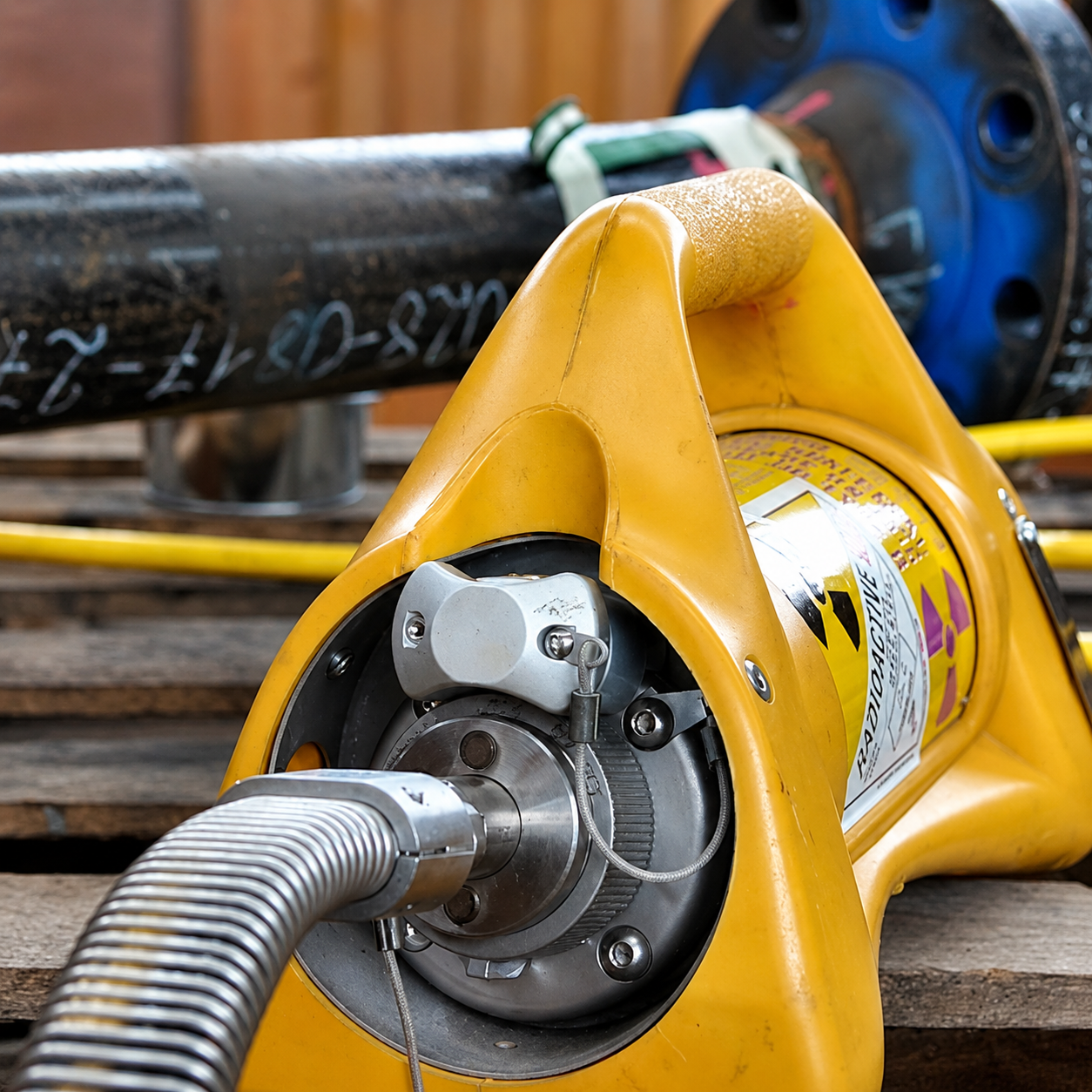
Iridium 192 Radiography: Iridium -192 is used for radiography of steel thickness of about 5mm to 70 mm. We have Exposure devices (Roli – 2/3, Rotex-I, Delta 880) that are all imported and the latest